| | | | | | | | | | | | Laboratory & testing updates | | | | National Genomic Test Directory webinar | | Understanding the Haematological Oncology and Solid Tumour Transformation, and the New National Genomic Test Directory | Thursday 12 November 2026, 1:00pm
This webinar will explore the transformation of genomic testing across haematological oncology and solid tumour services, and what this means for clinicians, service teams, and the wider NHS. The session will cover:- latest developments in the new National Genomic Test Directory, including key changes to test eligibility, pathways, and service delivery
- how genomic testing is supporting more personalised approaches to cancer care
- the ongoing transformation of haematological oncology and solid tumour testing services.
Whether you are involved in requesting, delivering, commissioning, or supporting genomic testing services, this webinar will help you understand the evolving landscape and the practical implications for your role.
Who should attend? Healthcare professionals, commissioners, operational teams, programme managers, and anyone with an interest in cancer genomics and the future of genomic testing within the NHS. Register for the webinar here.
NHSE welcome your thoughts to help shape the platform before it's full launch. You can explore the new NGTD ahead of the webinar. | | | | | Updated Solid Cancer and Prenatal Testing Forms | | We have updated our solid cancer order form to include revised options for tumour purity marking (%) to better support referrals from Cellular Pathology Genomics Centres (CPGCs). The new form should be used when placing non-whole genome sequencing solid cancer orders via our Cambridge Laboratory. See our website for further details and to access the new form.
We have also introduced a new notification form for prenatal testing. Please use this form to notify us in advance of testing to help manage capacity and ensure results can be returned swiftly. See our website for guidance and to access the form. | | | | | Phased introduction of SMA screening in England | | From October 2026, some babies in England started to be tested for spinal muscular atrophy (SMA), a rare but serious genetic condition that affects 1 in 10,000 children. An in-service evaluation will assess the feasibility of adding SMA to the newborn blood spot test.
Early diagnosis and treatment can improve outcomes and enable children with SMA to lead healthier, fuller lives.
Screening laboratories will begin screening in phases from 1st October 2026 with full rollout by spring 2028. Data from the evaluation will be used to inform future recommendations from the UK National Screening Committee on newborn screening for SMA after the evaluation concludes.
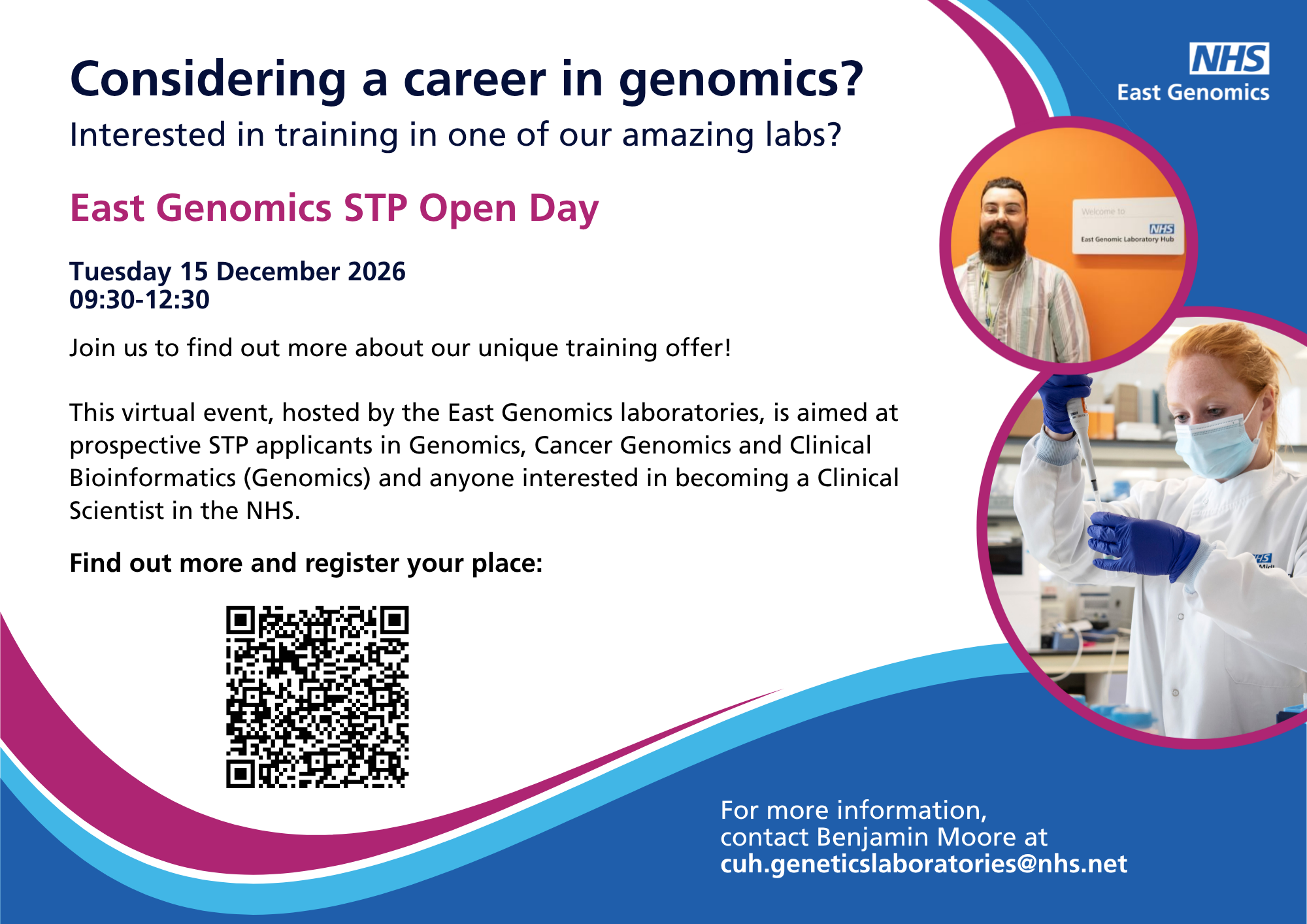
| | | | | | On Tuesday 15 December (9.30am - 12.30pm) we're hosting a virtual Open Day for prospective Scientific Training Programme (STP) applicants in Genomics, Cancer Genomics and Clinical Bioinformatics (Genomics) and anyone interested in becoming a Clinical Scientist in the NHS.
Speakers include Clinical Scientists working in our Cambridge, Nottingham and Leicester labs who will talk about our unique training offer, our career opportunities, useful information about the STP and expert advice on how to succeed in your career. You can register your free place here. | | | | | | | | | East Genomics leads national network of excellence on rapid genome sequencing in paediatric cancers | | Further to the announcement last month of our involvement in the new Brain Cancer NHS Genomic Network of Excellence (NoE), earlier this month we announced that we are leading on the Paediatric Cancer Genomic NoE, which aims to develop a pathway for providing actionable clinical results from whole genome sequencing within days of biopsy collection, to accelerate and improve cancer treatments for children.
Current whole genome sequencing pathways can take weeks to return results, often too late to inform initial treatments, which need to be initiated within days following diagnosis. The Paediatric Cancer Genomic NoE builds upon recent research led by Dr Aditi Vedi at Cambridge University Hospitals.
This validation study found that rapid WGS could be delivered with 2-3 days and influence management for over half of newly diagnosed patients in the cohort. This included starting treatment sooner, avoiding chemotherapy, avoiding surgery, use of precision treatments and, in some cases, avoiding treatments altogether.
Through this NoE, the rapid sequencing pathway will be available to all eligible paediatric cancer patients (including teens and young adults to age 25 years) receiving testing through the NHS Genomic Medicine Service. The goal of the network is to establish procedures within the NHS for equitable access to rapid WGS and methylation analysis for all eligible paediatric cancer patients.
The network will be run by a multidisciplinary team led by Dr Vedi, East Genomics, and the South West Genomic Medicine Service as the lead sequencing sites, and also involving the North Thames, North East and Yorkshire, and North West Genomic Medicine Services.
| | | | | World-first same-day metagenomics for children can detect hidden infections in intensive care | | Great Ormond Street Hospital (GOSH) has successfully implemented a pioneering same-day respiratory metagenomics testing service for children in intensive care, helping clinicians identify infections more quickly and make better-informed treatment decisions. The findings, published in The Lancet Microbe, mark the first implementation of a same-day pan-microbial metagenomics service for children.
The implementation at GOSH represents a significant milestone for the NHS Respiratory Metagenomics Network, which is working to roll out rapid respiratory metagenomics across hospitals nationally. The work forms part of NHSE’s Genomic Network of Excellence with the metagenomics network led by South East and Central and South Genomic Medicine Services.
The service, developed from a pathway first established at Guy’s and St Thomas’ NHS Foundation Trust, was implemented at GOSH during the 2024-25 winter season. The recently published study found that metagenomics delivered results that altered clinical management in almost one-third (29%) of samples tested. In a quarter of cases (26%), the results influenced antimicrobial prescribing, including starting, stopping or changing antibiotics, or providing confidence that the current treatment was appropriate.
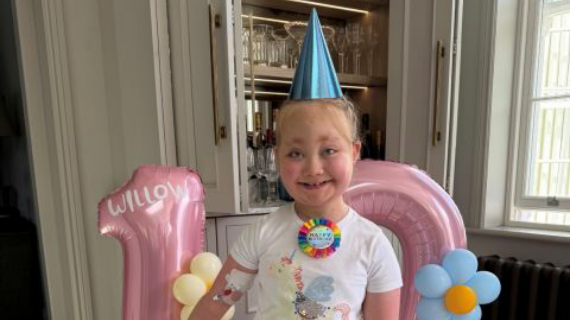
Same-day metagenomics testing for Willow meant that the cause of her pneumonia could be traced to a bacteria that had become resistant to the antibiotic she was given. Willow Crowther, age 10, has Kabuki Syndrome, a rare genetic disorder that affects multiple body systems and causes characteristic facial features, developmental delays, and growth abnormalities.
In March 2026 she experienced a prolonged epileptic seizure that required hospitalisation and led to her having two cardiac arrests. Willow was intubated and transferred to GOSH, where she was still very poorly and continued to have cardiac arrests. Willow was moved to the specialist cardiac intensive care unit while she was given life support in the hope that she could recover.
As the metagenomic testing was underway at GOSH, Willow’s blood was tested for unknown organisms and Mycoplasma pneumoniae was found. Crucially this cutting-edge testing was able to show that the bacteria was resistant to the antibiotic she had been prescribed – this would not have been possible through standard means. With the right treatment now available to her, Willow was able to recover from her infection. Mum, Stacey, said: “Doctors gave Willow a 50:50 chance of survival and this quick test meant she got the treatment she needed as fast as possible. To know that this could help more families and more children get the answers they need, as quickly as possible is amazing – surely this will save lives".
The team believe the programme could play an important role not only in patient care and antimicrobial stewardship, but also in pandemic preparedness by helping clinicians identify unexpected or emerging infectious threats. Read the full story here. | | | | | | | Genetic test paves way for World championship gold for Georgina | | We recently shared the story of a Lincolnshire woman with Down syndrome who became a judo world champion thanks to the support of the Clinical Genetics service at Nottingham University Hospitals.
Georgina Grayson, from Spilsby in Lincolnshire, won gold at the 2026 JuDown World Championships in Sweden in August of this year. Not only was she the first athlete from Great Britain to compete at the championships, but it was also the first time the British national anthem had been played at the event in its ten-year history. But before Georgina could step onto the mat, she faced an unexpected challenge. Competition organisers required athletes to provide genetic confirmation of their Down syndrome diagnosis, including confirmation of the specific type of Down syndrome they have.
Despite Georgina having lived with the diagnosis since birth, the necessary records could not be found. Georgina's mother Sarah spent months contacting former hospitals, GP practices and genetic services in an effort to locate the paperwork, but no records confirming that Georgina had Down syndrome could be found.
"I had done access information requests but to no avail” Sarah explains. “My GP couldn't help, so I contacted the Patient Advice and Liaison Service at Nottingham University Hospitals. They contacted the Clinical Genetics Service for me and then everything suddenly fell into place". Read the full story here. | | | | | | Central and South Genomics are working on a campaign to raise awareness of Lynch syndrome. As part of this, they have created a video to raise awareness of cancers that run in families, as well as a family history tool empower people to investigate their risk and a suite of associated materials for healthcare professionals and patients.
The team are keen to get feedback from those with experience of genetic testing, and are hosting focus group sessions with patient experts. The purpose of these focus groups is to get feedback on the video and the family history tool so that it can be optimised to show to patient audiences. There are four date and time options for attendees. If you, or patients under your care, have experience of Lynch Syndrome, the link to find out more and register is here. | | | | Integrated Care Hub for Fragile X launches at UHL | | A new integrated care hub for patients with Fragile X syndrome and their families has officially launched at the Leicester Royal Infirmary. The hub – which is the first of its kind in the UK – is being co-led by Clinical Geneticist, Professor Julian Barwell and parents Chris and Alex McQuade, supported by the Fragile X Society, UHL's Research department and Leicester Hospitals Charity.
It will serve as a space for work with families from across England to understand and meet their needs, while serving as a national centre of excellence for research into Fragile X syndrome - a genetic condition affecting around one in 4,000 males and one in 6,000 females.
Professor Barwell said: “The new hub will consolidate local expertise to provide a more holistic approach to the support we provide for people with the condition and their families. We want to make sure that a genetic test result becomes the beginning of our commitment to care, not the end.” You can listen to Julian's interview on BBC Radio Leicester here (from 1:07:30).
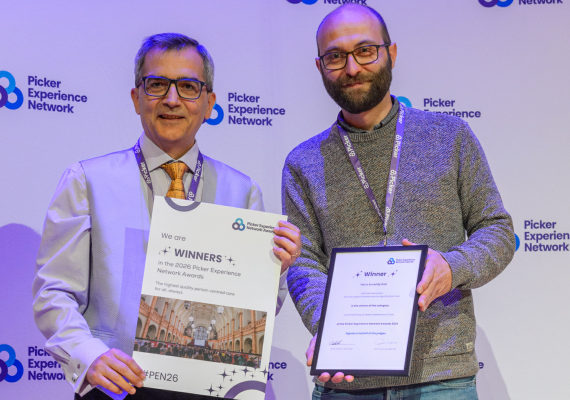
Alex McQuade said: “This will be a place where families can connect with each other and be supported, so that children with Fragile X syndrome have the best chance of going on to become independent as adults.” Read the full story here. | | | | | Familial Hypercholesteroleamia service wins prestigious patient experience award | | Last month we brought you the news that our Familial Hypercholesterolaemia (FH) Identification, which operates across Norfolk and Waveney out of Norfolk and Norwich University Hospitals (NNUH), was a finalist in the Picker Experience Network Awards 2026 in the category of 'Commissioning for Better Experience of Care'.
We're delighted to reveal that the service was announced as the winner at an awards ceremony at the University of Birmingham on 1 October. Accepting the award on behalf of the service, Dr Javier Gomez, Consultant Chemical Pathologist at NNUH (picture, left) said: "This award is a wonderful recognition of our Teamwork and Commitment to deliver a truly patient-centred care. It reflects the positive impact of early diagnosis of FH, personalised support, and collaborative service delivery in improving outcomes and experiences for individuals and families affected by Familial Hypercholesterolaemia across our region". Read the full story, and find out more about our FH Identification Service here. | | | | | | Registration open for NHS Genomics Healthcare Summit | | The 2026 NHS Genomics Healthcare Summit will be taking place over two days on Monday 14 December and Tuesday 15 December 2026 at the IET Savoy Place in London. This year’s programme will explore some of the most exciting opportunities shaping the future of genomics, including: - The future of genomics in the NHS.
- Advancing population health through genomics.
- Working together in the global genomics ecosystem.
- Genomics, precision medicines and therapies of tomorrow.
- Driving research and innovation forward.
You can find out more, including how to register, on the Summit website. | | | | | | The Festival of Genomics and Biodata will take place at the Excel, London on 27th and 28th January 2027. The largest annual event in the genomics calendar, it brings the people, ideas and technologies shaping genomics, biodata, diagnostics and clinical practice together - from focused sessions and curated networking to practical case studies and dedicated spaces, everything is there to help you make meaningful connections, discover what’s next and leave with ideas you can put into practice.
The following colleagues will be speaking at the event about developments and new Networks of Excellence involving East Genomics: - Aditi Vedi will be speaking on Rapid WGS: Building Equitable Access to Genomic Cancer Care For Paediatric Patients
- John Tadross will be speaking on Breaking the Cold Chain: A Scalable Architecture for Equitable Whole Genome Sequencing of Solid Tumours
- Matt Loose will be speaking on Sequencing Beyond the Genome: Real-Time DNA Methylation and Molecular Diagnostics
Visit the Festival website to see the full agenda and register your place. | | | | | BSGM position statement on misuse of ‘caucasian’ | | The British Society for Genetic Medicine (BSGM) is an independent body which provides a forum for professionals involved in genetics and genomics as a clinical service and in research. They support the promotion and advancement of genetic and genomic science in clinical and research practice for the public benefit.
BSGM has always taken an active role in considering social, ethical and legal issues. They are committed to working with and for patients and families living with genetic/genomic conditions and to reducing health inequalities and inequities. Genomics frequently captures and uses human population data in clinical practice, research and publications.
Descriptions of ethnicity (which here refers to common ancestry, geographical origins, and cultural traits linked to genetic variation) or genetic ancestry (which here refers to statistical inference about shared genetic history) may be useful in specific circumstances. However, the terms used to describe people, populations and data categories should be accurate, specific and not harmful. ‘Caucasian’ is often used in place of ‘White’ when describing/classifying ethnicity. This use is outdated and discredited. They are concerned about the negative and discriminatory consequences of its historical and ongoing misuse. A lack of awareness around this term has led to its continued use in this way despite being based on faulty (and often racist) assumptions/beliefs. Read the BGSM Position Statement here. | | | | | Webinar: Developing a regional Genomics Community of Practice Programme | | Our 16 Genomic CoPs were implemented as a scalable and systematic approach to developing genomics capability across a large, multidisciplinary workforce, in support of our priorities and areas of work.
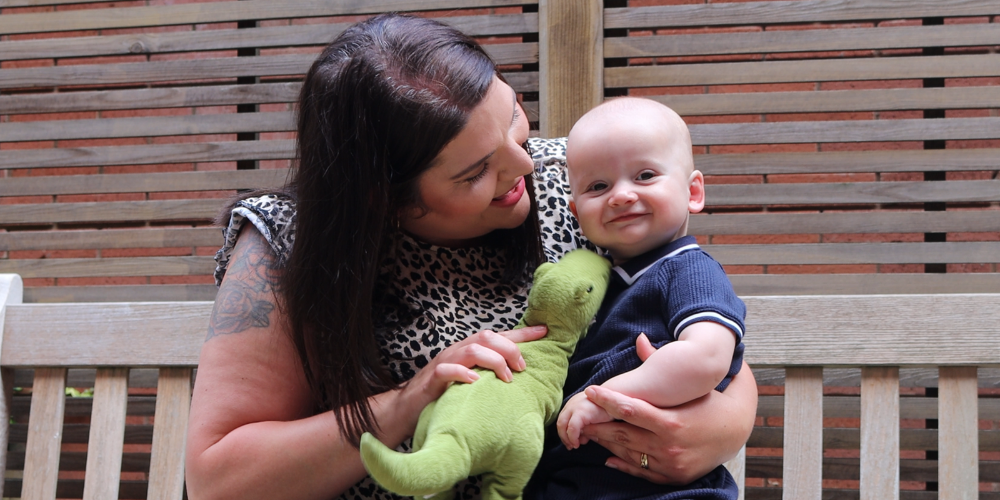
Join us for a webinar on Tuesday 10 November 2026, 12pm - 1.30pm where we will: | | | | | | | | | | | | | | | | | | | | | | | Baby receives life changing treatment after mum says yes to Generation Study | | A baby boy in Derby was able to start treatment for a rare genetic condition including access to specialist, life changing care and support after taking part in the Generation Study.
As part of the study, his genes were sequenced shortly after birth because his mum took part in the study at University Hospitals of Derby and Burton (UHDB). Elaine Hess signed up to the Generation Study at her 12-week scan. The study involves a non-invasive blood sample which is taken from a baby's umbilical cord blood after birth, which is then used to analyse the baby's genome.
Elaine received a call from a specialist clinician explaining that the screening had identified a possible genetic condition called C6 deficiency, which is an immune condition that affects the body's ability to fight infection.
Elaine remembers the phone call, she said: "My stomach flipped. You go to instant worst-case scenario but, there was no time for panic because we got access to the consultant quickly, who explained Aidan's diagnosis and our questions were answered. I felt so relieved that by simply choosing to opt into the Generation Study research, we had learned about Aidan's genetic condition early which has had a life changing impact on our family because we now know what to look out for, and how to make sure he is safe and supported"
The early diagnosis has helped the family understand what symptoms to watch for and when to seek help. Because Aidan is at risk from certain bacterial infections, such as meningitis, which can be very serious in young children, the family now know they need to seek urgent medical advice if he develops a temperature or signs of infection.
Thanks to the family's participation in the study, baby Aidan is now under the expert care of Dr Lucy Cliffe, Consultant Paediatrician in the Paediatric Immunology Service at Nottingham Children's Hospital, paert of Nottingham University Hospitals (NUH) where he is receiving preventative antibiotics and additional vaccinations.
The diagnosis is also helping baby Aidan's family, with his sister now having genetic testing too and clinical genetics teams helping the family understand what the condition could mean for future children.
| | | | | | | Public back genomics for prevention and personalised healthcare, with trust and transparency essential | | People across England are supportive of using genomics to help prevent illness and personalise healthcare, but say future programmes must be built on trust, fairness and transparency, as well as limiting the burden on the NHS, according to a major national engagement programme commissioned by Genomics England.
Genomics, Healthcare and You explored views from more than 300 people on how genomic information could be used as part of routine healthcare in the future. Participants were optimistic about the potential of genomics to support prevention, earlier intervention and more personalised healthcare. However, support was not unconditional. Across the programme, people consistently emphasised that any future use of genomic information must be evidence-based, equitable, transparent and delivered through a healthcare system that is equipped to use it safely and effectively. Trust emerged as the strongest and most consistent theme throughout the programme. Members of the public wanted reassurance that genomic information would be used responsibly, that robust safeguards would be in place around data access and governance, and that decisions about the use of genomic information would be made transparently.
The findings will be used alongside scientific, clinical, operational and ethical evidence to inform the design of a Genomics England-led adult population genomics research study. The study, outlined in the Government's 10 Year Health Plan for England and the Life Sciences Sector Plan, is expected to recruit up to 150,000 adults to generate evidence on how genomics could support earlier detection of disease, prevention and more personalised care. Read the full story here. | | | | | Advancing innovation in accelerated cancer diagnosis | | Innovate UK, on behalf of the Office for Life Sciences’ (OLS) Cancer Healthcare Goals programme, will invest up to £25.4 million in innovative CR&D projects. This funding will be to support the clinical validation and evaluation of early cancer diagnostic technologies and devices.
Projects addressing the needs of those with less common cancers are particularly encouraged. Less common cancers are defined as any cancer type outside of breast, prostate, lung, and bowel cancer. Less common cancers can include rare forms of these four cancer types. The aim of this competition is to accelerate the development of diagnostic innovations that enable the earlier detection and diagnosis of cancer, particularly less common cancers.
Projects must focus on developing, validating or evaluating diagnostic technologies or approaches that demonstrate clear potential for clinical and health economic impact. Projects can generate robust evidence to support regulatory approval and future NHS adoption. Find out more. | | | | | Thousands of patients to benefit from new daily pill for serious heart condition | | Aficamten, also known as Myqorzo, is a once-daily pill for people with obstructive hypertrophic cardiomyopathy (HCM) - a condition where the heart muscle becomes thickened and stiff, making it harder for the heart to pump blood around the body. It can cause exhaustion, dizziness, breathlessness, chest pain and a racing or irregular heartbeat.
Around 1 in 500 people in the UK has HCM, and in roughly half of cases it is inherited. Clinical trials show aficamten helps people exercise more easily and reduces their symptoms. It is likely to be as effective as mavacamten, the other NICE-approved treatment for HCM, and patients may need fewer monitoring scans to find the right dose. NICE used a cost comparison approach for this drug, where to get a positive recommendation, the company needed to demonstrate the costs for aficamten are similar to or lower than those for mavacamten for treating symptomatic HCM, which is recommended by NICE for this population and is already in use in the NHS. Find out more. | | | | | | | | | | | | | | | Upcoming Communities of Practice | | Here are some upcoming meetings, with registration links, for our Genomics Communities of Practice: | | | | | 27 Oct: Genomics and rare cancers: what you need to know | | Join Central and South Genomics for a webinar on the genomics of rare cancers. Rare cancers are defined as affecting a small number of people, starting in an unusual place in the body, or being an unusual type of a more common cancer. Whilst rare cancers are generally individually uncommon, they make up nearly a quarter (about 24%) of cancer cases diagnosed in the UK and European Union per year.
This webinar aims to raise awareness of the genetics of rare cancers and ongoing work in this space to advance care for those who are diagnosed with them. Attendees will hear from a range of experts on topics including cancer of unknown primary (CUP), rare inherited cancers, and much more. This event is for healthcare professionals working in any specialism who are looking to learn more about rare cancers from a genomics perspective, to increase their ability to identify when testing may be required, to guide patients through the process and to learn how to speak to patients about genomics, rare cancers and tailored treatments. Find out more and register your free place. | | | | | Sep-Dec: Webinar series - 'The Clinician's Guide to Genome-Directed Therapies' | | A growing number of therapies now rely on genomic information to identify patients and guide clinical decision-making. These therapies include gene replacement, RNA therapies, genome editing, cellular therapies, and pathway-directed treatments.
To support healthcare professionals in understanding this rapidly evolving landscape, NHS England’s Genomics Education Programme has launched a new webinar series: The Clinician's Guide to Genome-directed Therapies. Running from September to December 2026, this eight-part lunchtime webinar series (1pm-2pm) will provide a practical introduction to the major genome-directed therapeutic approaches.
The series is designed for healthcare professionals across the specialties and professional groups who have an active role in delivering genomic medicine and an interest in genome-directed therapies and their application in clinical practice.
Upcoming topics include: - Switching Off Harmful Genes — Dr Nayana Lahiri: Wednesday 4 November
- Targeting the Pathway — Professor Sahar Mansour: Wednesday 18 November
- Reprogramming Cells to Treat Disease — Dr Emma Nicholson: Wednesday 2 December
- Ethics, Access and Equity — Professor Anneke Lucassen: Wednesday 16 December
You can register for the series here. | | | | Genomics and counselling skills course | | Clinical healthcare professionals keen to develop their knowledge of genomics are invited to apply for a popular introductory genomics counselling course, with the opportunity to extend their studies to a Postgraduate Certificate (PGCert) in Genomics. The course is delivered online through blended learning by the University of the West of England (UWE Bristol).
To support healthcare professionals in developing their understanding of genomics and in better supporting patients, UWE Bristol has developed this online course in collaboration with Macmillan Cancer Support, the British Heart Foundation, Genomics England, a range of NHS genomics specialists, and the NHS England Genomics Education Programme (GEP). Find out more here.
| | | | | 9-12 Nov: EMBL cancer genomics conference | | This conference will provide an opportunity to learn about the progressing area of cancer genomics. It will cover presentations from cancer genome projects, the areas of cancer functional genomics, systems biology, cancer immunogenomics and epigenomics, and the translation and clinical impact of scientific results.
The meeting will bring together leading scientists and academic clinicians from across these areas for a unique opportunity to interact and stimulate further integration of these efforts. This conference will take place at EMBL Heidelberg, with the option to attend virtually. Registration is not yet open for this event. If you are interested in receiving more information please register your interest. | | | | | 10 Nov: Establishing a regional Genomics Communities of Practice programme - Learning from East Genomics | | This webinar will pick out the key elements and evaluation measures of the East region Genomics Communities of Practice programme, provide case studies of service improvements facilitated by the programme, and introduce a Genomics CoP Toolkit to support other GMS regions and NHS partners interested in developing a Genomics CoP programme of their own.
Who should attend? - Regional GMS Leads (e.g. Education and Training, Medical, Nursing, Midwifery, Pharmacy, Clinical Directors)
- Other NHS staff or operational teams interested in developing a CoP Programme
| | | | | 11 Nov: Stopping Disease Before it Starts - NIHR BRC Cambridge event | | This free event will showcase how Cambridge researchers are working to prevent disease and improve early diagnosis. Join the team on Wednesday 11 November at the Frank Lee Centre, Cambridge University Hospitals, to discover the latest research and developments.
The event will feature: - Talks from guest speakers, featuring cancer, dementia and cardiovascular disease
- Latest from Cambridge researchers exploring disease prevention and earlier diagnosis.
- A poster exhibition showcasing research across a number of different health themes.
- An opportunity to meet and chat with researchers about their latest work over refreshments Discounted parking for attendees.
There are two opportunities to attend this event, either the 4pm or 6pm talks, so you can choose which time suits you. Please book via the NIHR BRC: Cambridge EventBrite page. | | | | | 11-13 Nov: Training Course in Pharmacogenetics | |
This in‑person course in Manchester, supported by the European Society of Human Genetics (ESHG), is aimed at pharmacists, GPs and hospital physicians and nurse prescribers with an interest in pharmacogenomics. The programme will cover core PGx principles, clinical implementation, and practical case-based learning, delivered by national and international experts. Further details, including the programme, registration and fellowship information, are available here. | | | | | 17 Nov: Improving the genetic testing pathway for people following recurrent miscarriage | | Over the past year, we have been listening to women, families, and healthcare professionals from across the country to better understand the experiences of recurrent miscarriage care, what is working well, and where improvements are needed.
Please join us on 19 November for the next in our series of Empowering Nurses & Midwives where we will share our findings and discuss what they mean for your practice. We’ll be exploring how we can work together to improve care and make a meaningful difference to the experiences of women and their families during an incredibly difficult time.
By attending, you will: - Gain early access to new resources designed to support clinical practice
- Hear directly from women and healthcare professionals about their experiences
- Learn about practical opportunities to improve care and support for families
- Contribute to a national conversation about improving recurrent miscarriage services.
Register for your free place here. | | | | | 19 Nov: Genomics for Medical Educators | | NHS Central and South Genomics are holding a 1‑day intensive 'Genomics for Medical Educators' education day, on 17 November at the University of Oxford. The course will be delivered by education specialists, consultant clinical geneticists, clinical scientists, pharmacist specialists, and patient experts from Central and South Genomics. Find out more and register here. | | | | | 8 Dec: Genomics - The power of networking to drive genomic innovation | | Hosted by Health Innovation Wessex (HIW), the session will cover: - The opportunities and challenges in the genomics innovation landscape.
- What patients and innovators are experiencing and how HIW are working with them.
- How the three health innovation networks, Health Innovation Wessex, Health Innovation West Midlands, Health Innovation Oxford & Thames Valley, in the NHS Central and South Genomics geography supported the identification, collaboration and adoption of genomics innovations.
- Specific genomic collaborations and the impact they have had including working towards a shared objective.
Part of the Health Innovation Wessex 'Innovation Insights' webinar series, this session is aimed at Health system leaders, Service improvement manager, Clinical directors and Policy and transformation leads. Find out more and register here. | | | | | 14-15 Dec: NHS Genomics Healthcare Summit | | Now in its fifth year, the NHS Genomics Healthcare Summit is the landmark event in the field of genomics, exploring advances in genomic medicine, its clinical applications and plans for genomics-enabled healthcare. The summit is a face-to-face event bringing together NHS leaders, commissioners, policymakers, industry partners, clinicians, researchers and partners from across the genomics landscape to share best practice, showcase innovation and discuss future priorities for genomics in the NHS.
By attending this event, you will hear the latest plans for the future of genomics-enabled healthcare and how this will benefit patients, communities and populations. Following the publication of the Government's 10 year Health Plan for England: Fit for the Future, which identifies genomics as one of its five "big bets" because of its potential to accelerate healthcare reform and support the long-term financial sustainability of the NHS, this year's programme will explore some of the most exciting opportunities shaping the future of genomics, including: - Harnessing genomics to improve population health
- Collaborating across the global genomics ecosystem
- Genomics, pioneering medicines and therapies of tomorrow
- Accelerating research, innovation and discovery
| | | | | 14 Dec: East Genomics STP Open Day | | | | | | | | | Events calendars of other organisations (A-Z) | | | | | | | | New on our website:
Genomic Testing: | | Useful links and resources | | | | | | - Enquiries regarding any specific genomic tests should be directed to our lead lab at Cambridge University Hospitals: cuh.geneticslaboratories@nhs.net
- Enquiries in relation to projects, mainstreaming, pathway development and wider education, training and and engagement should be directed to: cuh.egmsa@nhs.net
To share future newsletter content or suggestions please email Ian at i.kingsbury@nhs.net.
If you have been forwarded this email by a colleague and would like to be on our mailing list, please register here. | | | | | | If you would like to unsubscribe from these newsletters please email us | | | | | | | |