| |
| |
| |
| |
We hope you found our first edition useful. This issue brings together further updates, resources and opportunities to support genetics and genomics in maternity care.
As always, thank you for all that you do to support this work.
Jo Hargrave Lead Midwife, NHS East Genomics | | | |
| |
Generation Study reaches major milestone | |
Emily Li, our Operational Manager
The Generation Study has reached a major milestone, with the 100,000th family consenting to take part in screening newborns for more than 200 genetic conditions.
The 12 maternity units across East Genomics have recruited almost 22,000 families, with 55 babies receiving a screen-positive result. Some results have been confirmed, while others are undergoing further testing.
Recruitment is now approaching its close, with families whose estimated due date is after 28 February 2027 no longer eligible to take part. However, cord blood collection must continue for all participating babies until further notice.
All results are expected by June 2027, with study findings and evaluations helping inform future decisions about genomic screening in newborns.
Thank you to all the midwives, clinical staff and research teams who have contributed to this important study and its potential to shape the future of newborn screening.
Looking ahead: An upcoming talk will explore the future of genomics in adult healthcare, particularly relevant to colleagues in primary care and population health. Find out more and register here: Genomics, Healthcare and You Webinar. | |
| |
| New RCOG Scientific Impact Paper Published: Cell-Free Fetal DNA Testing for Single Gene Conditions | |
The Royal College of Obstetricians and Gynaecologists has published a new Scientific Impact Paper which outlines the growing role of non-invasive prenatal diagnosis (NIPD) for selected single-gene conditions using cell-free fetal DNA from a maternal blood sample. Testing can be performed from 8 weeks' gestation and may provide a diagnostic alternative to invasive procedures in specific clinical scenarios. Examples include cystic fibrosis, sickle cell disease, Duchenne muscular dystrophy and some skeletal dysplasia’s. The paper highlights that NIPD is currently available within the NHS for selected indications through the National Genomic Test Directory and emphasises the importance of appropriate counselling and referral pathways. Read the full paper here. | |
| |
Could you support the Fetal and Women's Health GeNotes working group? | |
The Fetal and Women’s Health GeNotes working group are requesting support for the ongoing development of Genotes resources, the online resource providing clinicians details about requesting genetic testing, but also a comprehensive ‘encyclopaedia’ for genomics.
The working group aim to develop and maintain a bank of genomics educational resources to improve the integration of genomics in fetal and women’s health pathways and are specifically seeking O&G trainees and consultants with expertise in fetal medicine to develop and review specialty-specific genomic resources for fetal and women's health.
| |
| |
9 Nov: East Genomics Prenatal Genomics Forum | |
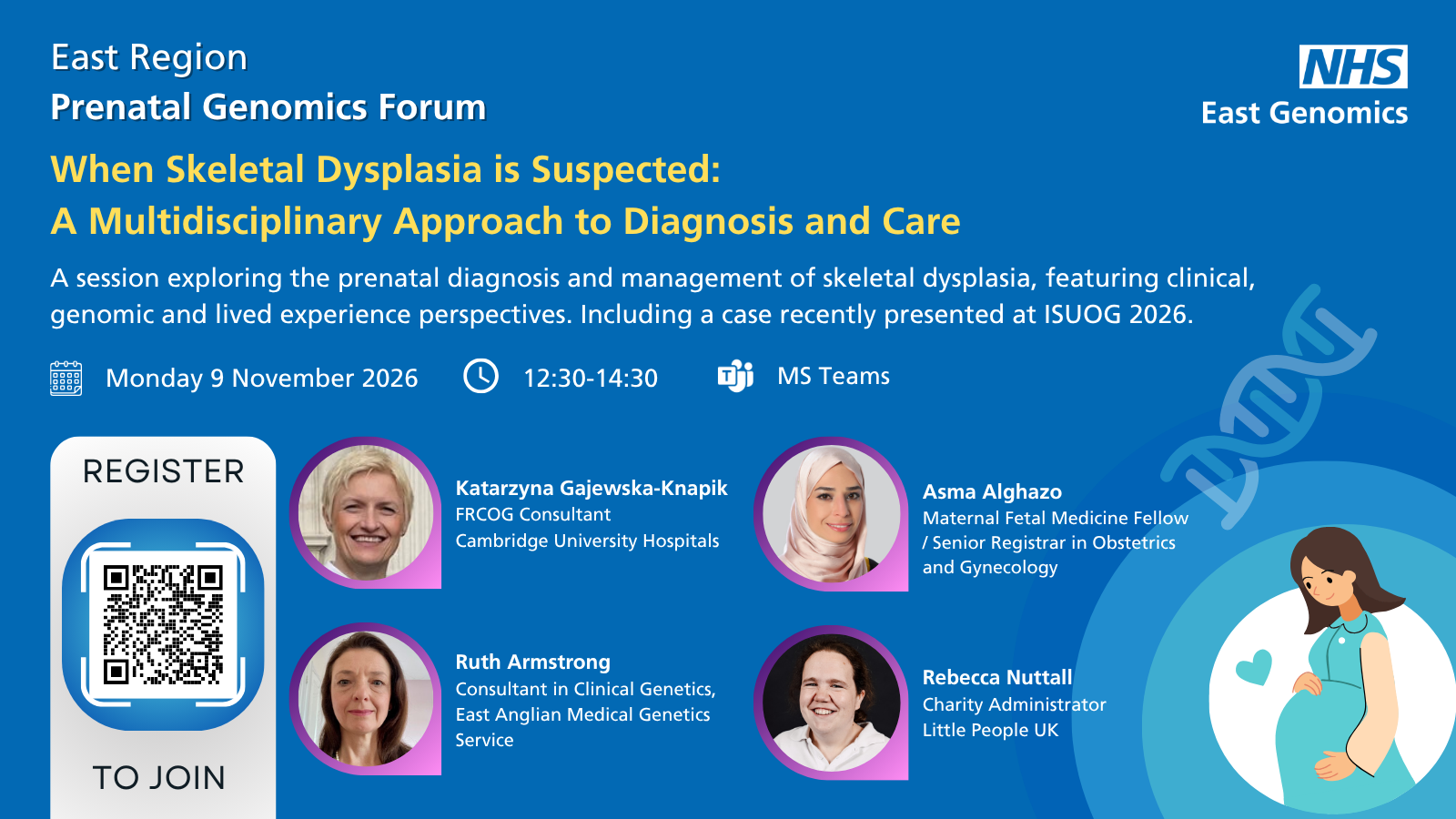
Join us on Monday 9 November, 12pm - 2.30pm, for a Prenatal Forum exploring the prenatal diagnosis and management of skeletal dysplasia, featuring clinical, genomic and lived experience perspectives. Including a case recently presented at ISUOG 2026. Register your free place here. | |
| |
| |
| 19 Nov: East Genomics HEI Regional Meeting | |
Genomic Placement provision and Assessment for Nurses and Midwives
Our HEI Forum brings together East Genomics, universities and education partners to support the integration of genomics into pre- and post-registration nursing and midwifery education. Meetings provide an opportunity to share best practice, identify educational needs and support the development of genomic knowledge and skills across the workforce.
| |
| |
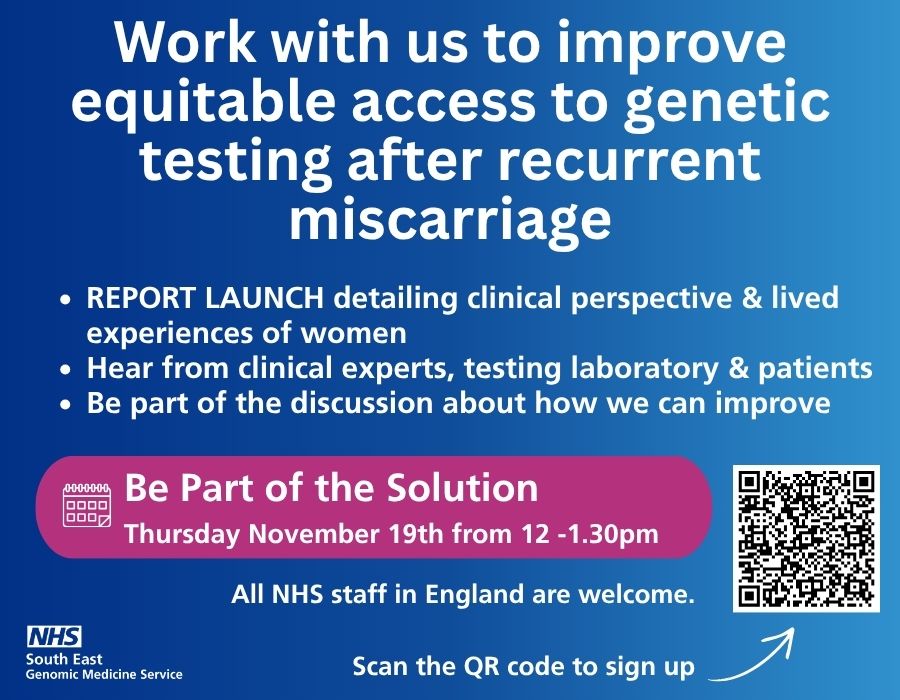
19 Nov: Lunch and Learn - Improving equitable access to genetic testing after recurrent miscarriage | |
Over the past year, we have been listening to women, families, and healthcare professionals from across the country to better understand the experiences of recurrent miscarriage care, what is working well, and where improvements are needed.
Join us on 19 November, 12pm - 1.30pm when we will be exploring how we can work together to improve care and make a meaningful difference to the experiences of women and their families during an incredibly difficult time. You can register your free place here.
| |
| |
Education, Training and Resources | |
| |
| |
| |
| |
| |
If you would like to unsubscribe to these newsletters please email us | |